Fire Keepers: Maidens and Symbols of Beltane
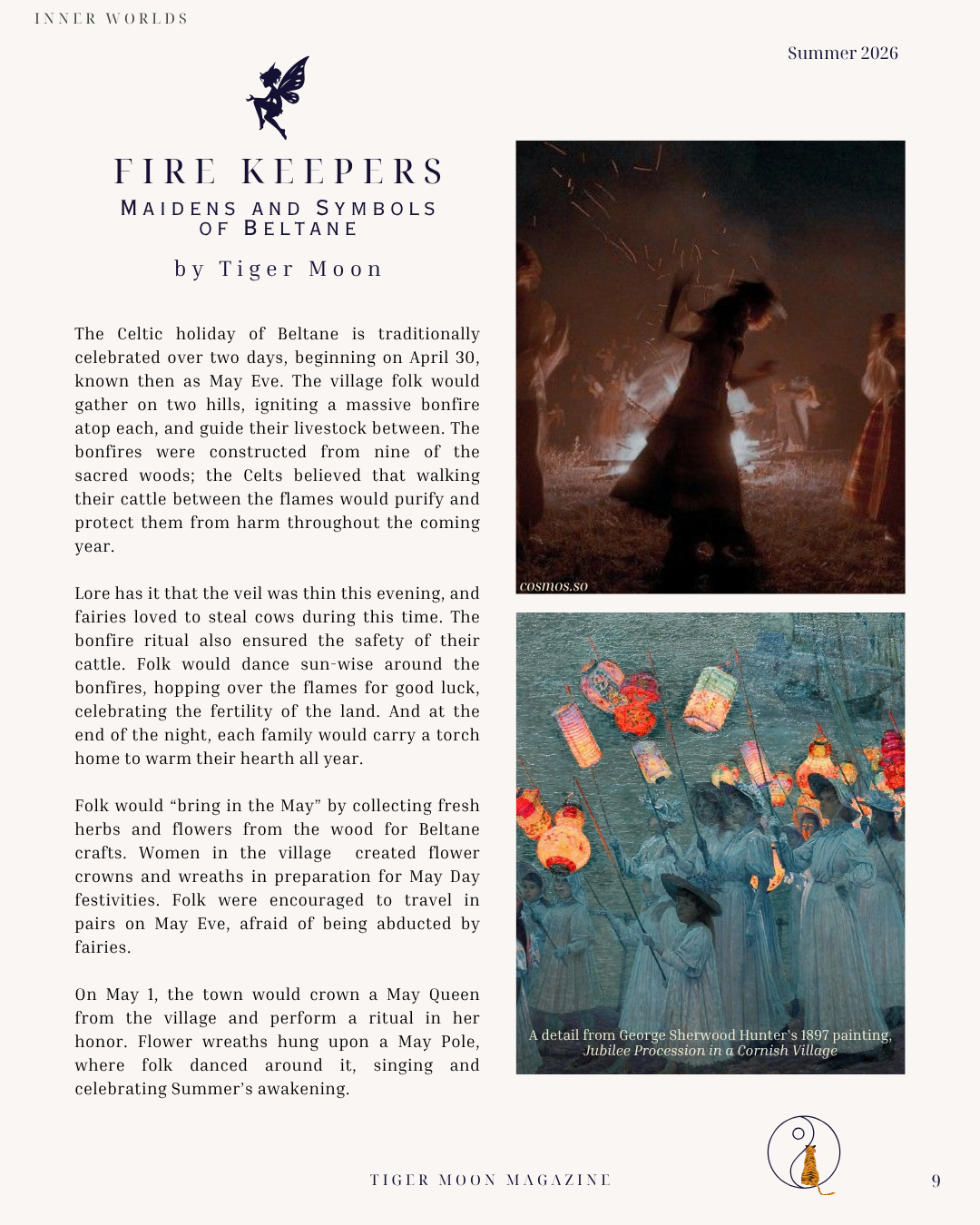
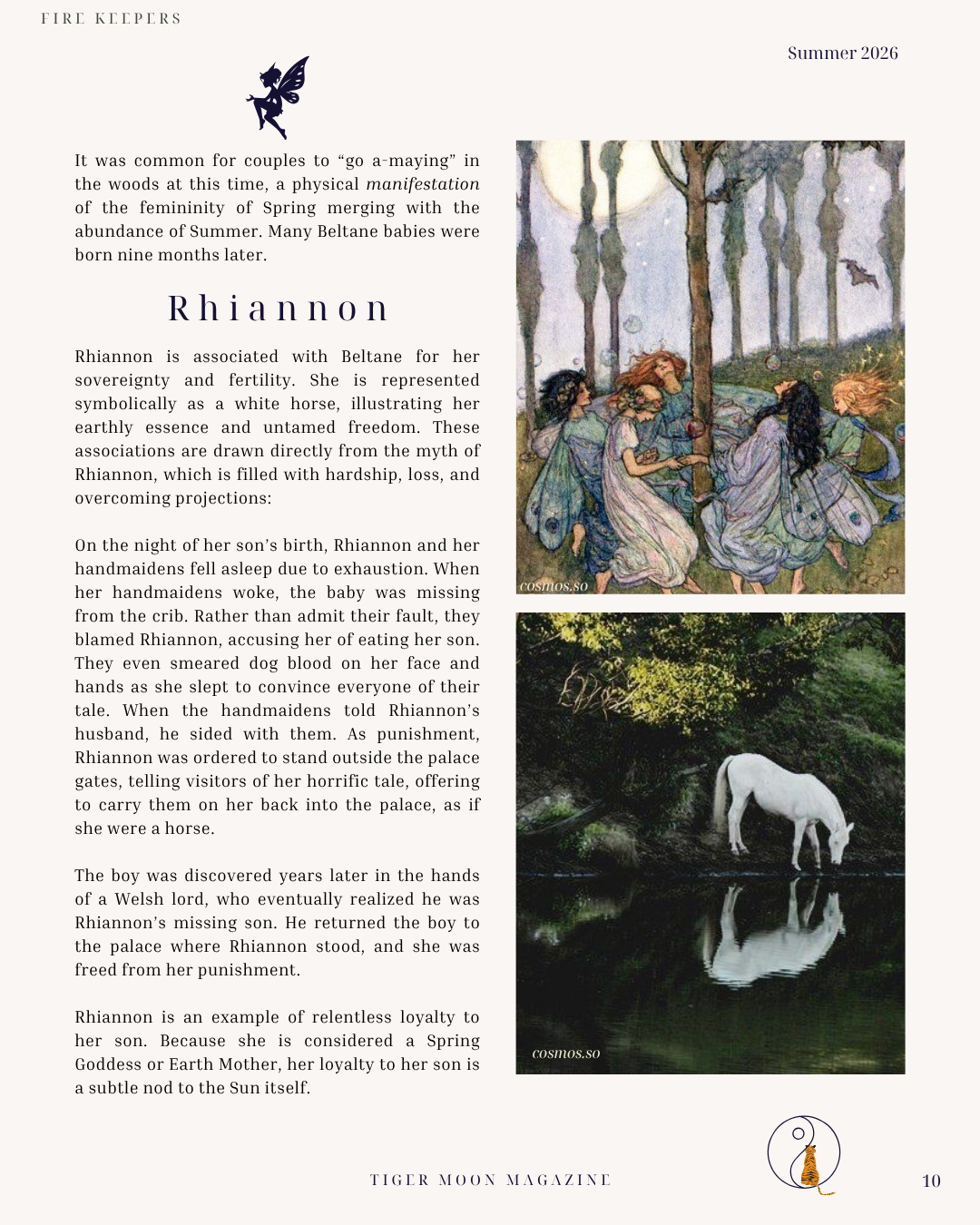
The Celtic holiday of Beltane is traditionally celebrated over two days, beginning on April 30, known then as May Eve. The village folk would gather on two hills, igniting a massive bonfire atop each, and guide their livestock between. The bonfires were constructed from nine of the sacred woods; the Celts believed that walking their cattle between the flames would purify and protect them from harm throughout the coming year.
Lore has it that the veil was thin this evening, and fairies loved to steal cows during this time. The bonfire ritual also ensured the safety of their cattle. Folk would dance sun-wise around the bonfires, hopping over the flames for good luck, celebrating the fertility of the land. And at the end of the night, each family would carry a torch home to warm their hearth all year.
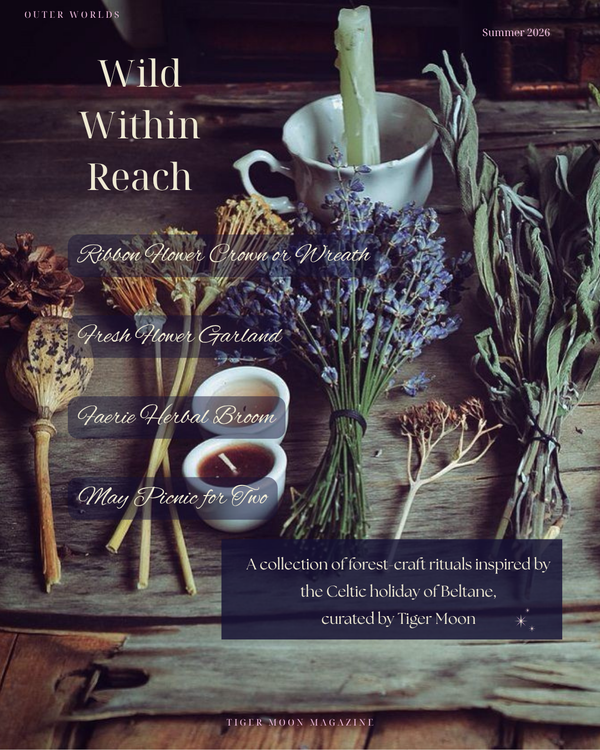
Folk would “bring in the May” by collecting fresh herbs and flowers from the wood for Beltane crafts. Women in the village created flower crowns and wreaths in preparation for May Day festivities. Folk were encouraged to travel in pairs on May Eve, afraid of being abducted by fairies.
On May 1, the town would crown a May Queen from the village and perform a ritual in her honor. Flower wreaths hung upon a May Pole, where folk danced around it, singing and celebrating Summer’s awakening.
It was common for couples to “go a-maying” in the woods at this time, a physical manifestation of the femininity of Spring merging with the abundance of Summer. Many Beltane babies were born nine months later.
Rhiannon
Rhiannon is associated with Beltane for her sovereignty and fertility. She is represented symbolically as a white horse, illustrating her earthly essence and untamed freedom. These associations are drawn directly from the myth of Rhiannon, which is filled with hardship, loss, and overcoming projections:
On the night of her son’s birth, Rhiannon and her handmaidens fell asleep due to exhaustion. When her handmaidens woke, the baby was missing from the crib. Rather than admit their fault, they blamed Rhiannon, accusing her of eating her son. They even smeared dog blood on her face and hands as she slept to convince everyone of their tale. When the handmaidens told Rhiannon’s husband, he sided with them. As punishment, Rhiannon was ordered to stand outside the palace gates, telling visitors of her horrific tale, offering to carry them on her back into the palace, as if she were a horse.
The boy was discovered years later in the hands of a Welsh lord, who eventually realized he was Rhiannon’s missing son. He returned the boy to the palace where Rhiannon stood, and she was freed from her punishment.
Rhiannon is an example of relentless loyalty to her son. Because she is considered a Spring Goddess or Earth Mother, her loyalty to her son is a subtle nod to the Sun itself.
Áine
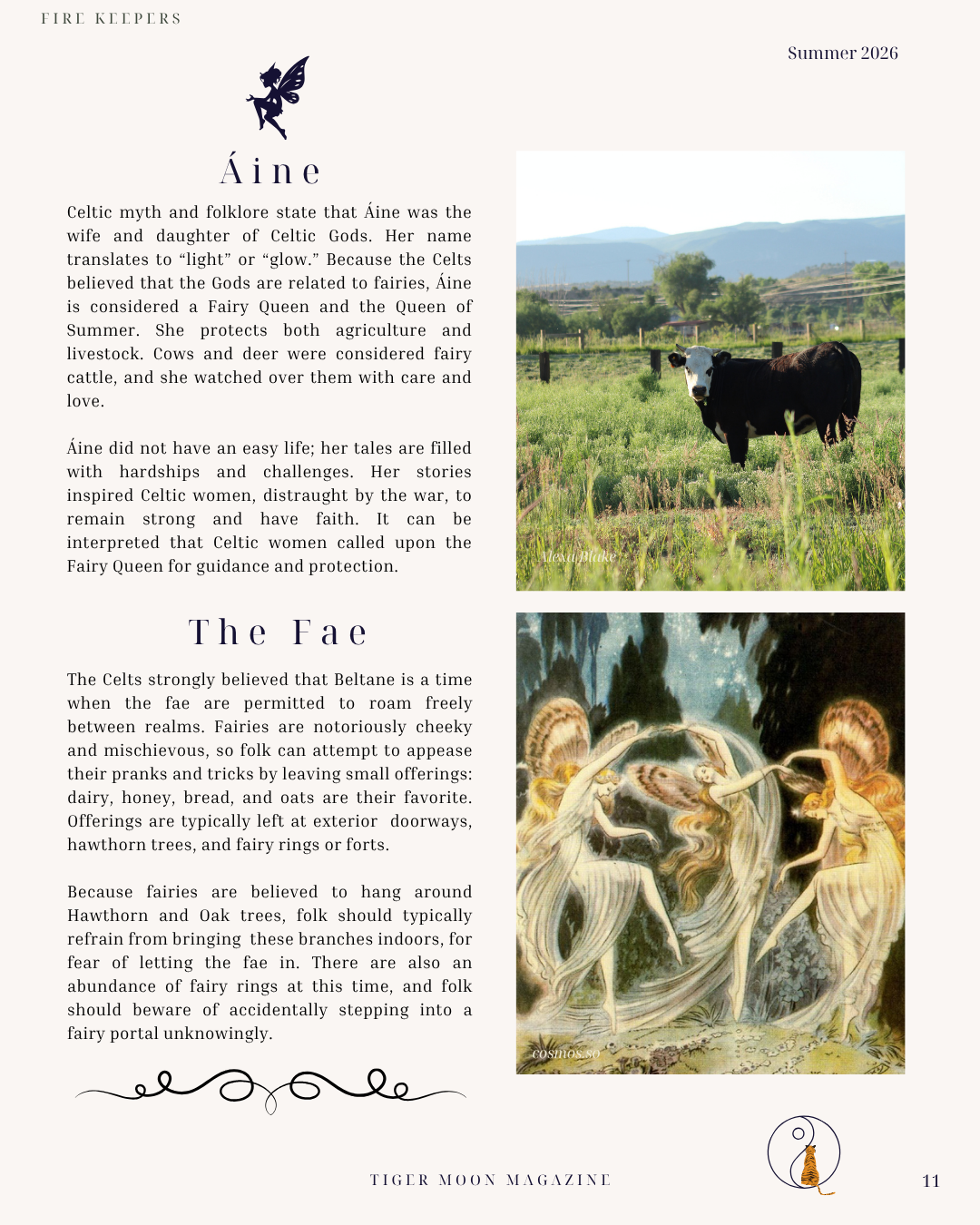
Celtic myth and folklore state that Áine was the wife and daughter of Celtic Gods. Her name translates to “light” or “glow.” Because the Celts believed that the Gods are related to fairies, Áine is considered a Fairy Queen and the Queen of Summer. She protects both agriculture and livestock. Cows and deer were considered fairy cattle, and she watched over them with care and love.
Áine did not have an easy life; her tales are filled with hardships and challenges. Her stories inspired Celtic women, distraught by the war, to remain strong and have faith. It can be interpreted that Celtic women called upon the Fairy Queen for guidance and protection.
The Fae
The Celts strongly believed that Beltane is a time when the fae are permitted to roam freely between realms. Fairies are notoriously cheeky and mischievous, so folk can attempt to appease their pranks and tricks by leaving small offerings: dairy, honey, bread, and oats are their favorite. Offerings are typically left at exterior doorways, hawthorn trees, and fairy rings or forts.
Because fairies are believed to hang around Hawthorn and Oak trees, folk should typically refrain from bringing these branches indoors, for fear of letting the fae in. There are also an abundance of fairy rings at this time, and folk should beware of accidentally stepping into a fairy portal unknowingly.